
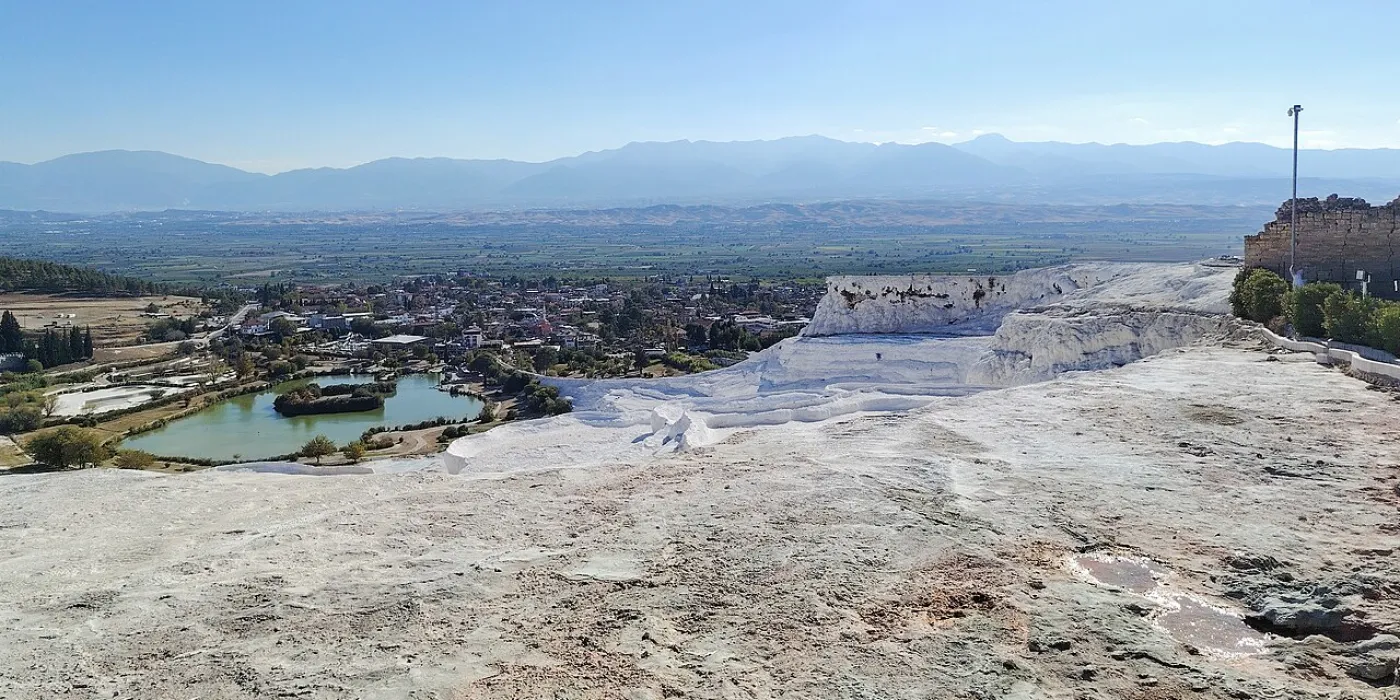
Pamukkale and Hierapolis share the hillside above the Denizli plain in western Türkiye. That makes them a natural pair for a one-day visit: you can see the white travertines and walk up to the Roman theatre in the same outing. Getting the order right matters more than squeezing in every ruin. If you are visiting independently from Denizli, you have more freedom to arrive early and choose your gate. If you are coming from Antalya, Side or Alanya, think first about how much of your day will actually be spent on the site. Use the route below as a plan you can shorten if the weather, energy levels or return transport call for a change.
What makes the Pamukkale terraces white?
The white deposits are travertine, a form of calcium carbonate left behind by mineral-rich thermal water. Over time the deposits build sloping rims, terraces and shallow basins. The shape reads clearly from a distance, while the fine ridges and textures come into focus when you stop on the permitted walking route. Pools can look very different from the photographs you have seen: water levels and flow vary, and some basins may be dry. Treat the turquoise water as a bonus and leave time to look out across the valley. UNESCO lists the natural formation together with Hierapolis, the ancient settlement that developed around the thermal springs.

Plan the drive and choose a starting point
For an independent trip, Denizli is a practical place to start. Before leaving, save the entrance you want as a map pin, as well as the place where you plan to park or catch your ride back. Search results for Pamukkale sometimes point to different ends of the site. This can make little difference on the way in and quite a difference at the end of a long afternoon. If you are using public transport, confirm both the outbound information and the last useful return connection. Ask locally when a timetable is unclear. Someone staying in the village has more flexibility to build the ruins and terraces around a lunch break.
A day trip to Pamukkale from the Turkish Riviera is largely a question of time on the ground. If you are comparing excursions from Antalya, Side or Alanya, check the pickup point, the number of other stops and the length of the main visit. See whether the programme allows enough time for both the terraces and the theatre. Families may also want to ask how much freedom they will have to slow down, stop for water or skip an optional activity. An early pickup can still mean a late return, so leave the evening open if you can. If Pamukkale is part of a longer driving itinerary, consider breaking the journey in Denizli or the village.
Morning: take the terraces at a steady pace
Start at the pedestrian approach from the village if you want the walk up the hillside to be part of the experience. Check ahead that the approach you are counting on is open, especially if the day has a tight transfer schedule. On sections where visitors walk on the travertine, follow the signs and remove your shoes when required. A light bag makes them easier to carry, and you will want them again on the archaeological paths. Keep to the designated visitor route. For travellers who want to prioritise the ruins or minimise the climb from the village, compare the entrances that serve the archaeological area before choosing where to arrive.
You can enjoy the terraces without stopping for a photo at every bend. Pick one broad viewpoint for a sense of the slope and pause again where you can see the fine ridges in the mineral deposits. At midday the white surface is bright, so sunglasses are useful even if you usually leave yours behind on city walks. If you travel with children, agree on a place to pause together. This helps if one person wants to study the water and another has already spotted the next viewpoint. On the way up, look back from time to time. As the angle changes, farmland and low buildings give a better sense of how much the hillside rises above the plain.
Lunch hours: Roman theatre and archaeology museum
Allow extra time for the walk from the terraces to the theatre. Once you are there, take in the curvature of the seats and the relationship between the auditorium, the slope and the old stage. It is a good place to spend a longer stop if you are choosing one archaeological highlight. Wear shoes that feel stable on uneven stone. Decide where to take a water break before the climb, particularly when your party includes children or visitors who prefer shorter walking stages. The wider site has many tempting branches, so agree whether the theatre will be your furthest point or whether you will continue towards another part of the ruins.
The Hierapolis Archaeology Museum occupies former Roman baths and complements the outdoor visit. It is a useful addition if you want to see archaeological material in a smaller area after the walking circuit. For a shorter visit, the terraces and theatre are a satisfying pair. Give the museum, necropolis or an extended walk a defined place in the day if you choose to add one. The Ancient Pool has its own visitor conditions, so check the official Ministry listing if a swim matters to you. Confirm current access, whether the activity has separate admission, and how it fits your return plan before treating it as a fixed part of the itinerary.
Pamukkale with children: keep some time in reserve
Pack water, hats, a snack and shoes that can be removed easily. If you use a pram or have limited mobility in your party, check which approach and surfaces suit you before setting out. Distances on a map do not capture slopes, exposed areas or pauses on uneven paths. Plan for a short rest before deciding whether to go farther. For younger children, pick a few things to look for along the way: a little rim where water flows over, the wide curve of the theatre seats and a view back towards the valley. With older children, try comparing the rock in the theatre with the newer-looking mineral surface on the terraces.
A final checklist for your visit
Confirm gate and ticket office times on the Turkish Ministry listings shortly before travelling. The last ticket time and the time the site closes can differ, so check both if you intend to arrive later in the day. Look up the weather, save the exact return meeting point and leave a margin for the walk from your last stop to the gate. If time is limited, focus on the terraces and theatre. Add the museum or another section of Hierapolis if your group still has time and energy. Travellers staying locally can make dinner the next stop instead of rushing to rejoin an evening plan on the coast. That extra breathing room often lets you see more detail in the places you actually visit.
Sources and current visitor information
UNESCO: Hierapolis and Pamukkale · Ministry: opening hours and admission · Hierapolis Archaeology Museum
Photo credits: Giorgio Galeotti (CC BY-SA 4.0) · Çiçisultan (CC BY-SA 4.0) · Antoine Taveneaux (CC BY-SA 3.0).


