
Two days in Marrakech give you time to explore the medina, look closely at the courtyards of Bahia Palace and spend a morning in Jardin Majorelle. The simplest plan puts the old city on day one and makes the garden the anchor for day two. That leaves a free afternoon to follow your interests or make an onward connection. If your flight arrives late, start this itinerary the following morning. Check in, have something to eat nearby and save the narrow lanes and busy square for daylight, when your first walk is easier to navigate.
Day one. The medina, Bahia Palace and Jemaa el-Fna
Start near the Koutoubia Mosque. Its minaret makes a useful landmark, and the space around it lets you get your bearings before entering the narrow streets. Look at the building from outside and save the location of Jemaa el-Fna on your phone. UNESCO includes the medina of Marrakech on its World Heritage List. Its walls, gates, religious buildings and former residences reflect the city's long history. For a first visit, pick two or three destinations inside the medina and explore the spaces between them on foot. An extra courtyard or street can be a better use of your time than another hurried stop.
Make Bahia Palace your main morning visit. The palace is arranged around several courtyards, with gardens and decorated rooms along the route. Notice the geometry of the zellige tilework and the way carved wood and plaster frame openings. Stand back at the threshold of a courtyard to see how the decoration connects the entire space. With children, turn the patterns into a simple game. Each person can look for a shape that repeats in more than one room. Check the Moroccan culture ministry's ticket page before setting off, especially if your trip coincides with a holiday or you have a tight schedule.

After the palace, allow time for lunch and a short walk through the souks. Pick something to look for, such as ceramic bowls or woven textiles, and check several stalls before deciding what you like. If you are considering a purchase, ask about materials, the final price and how it can be packed. Ask people before photographing them, particularly when you are pointing your camera into a workshop. Maps do not always reflect open passages or changes in pedestrian access. If a lane ends at a closed gate, return to a familiar junction and choose another route from there.
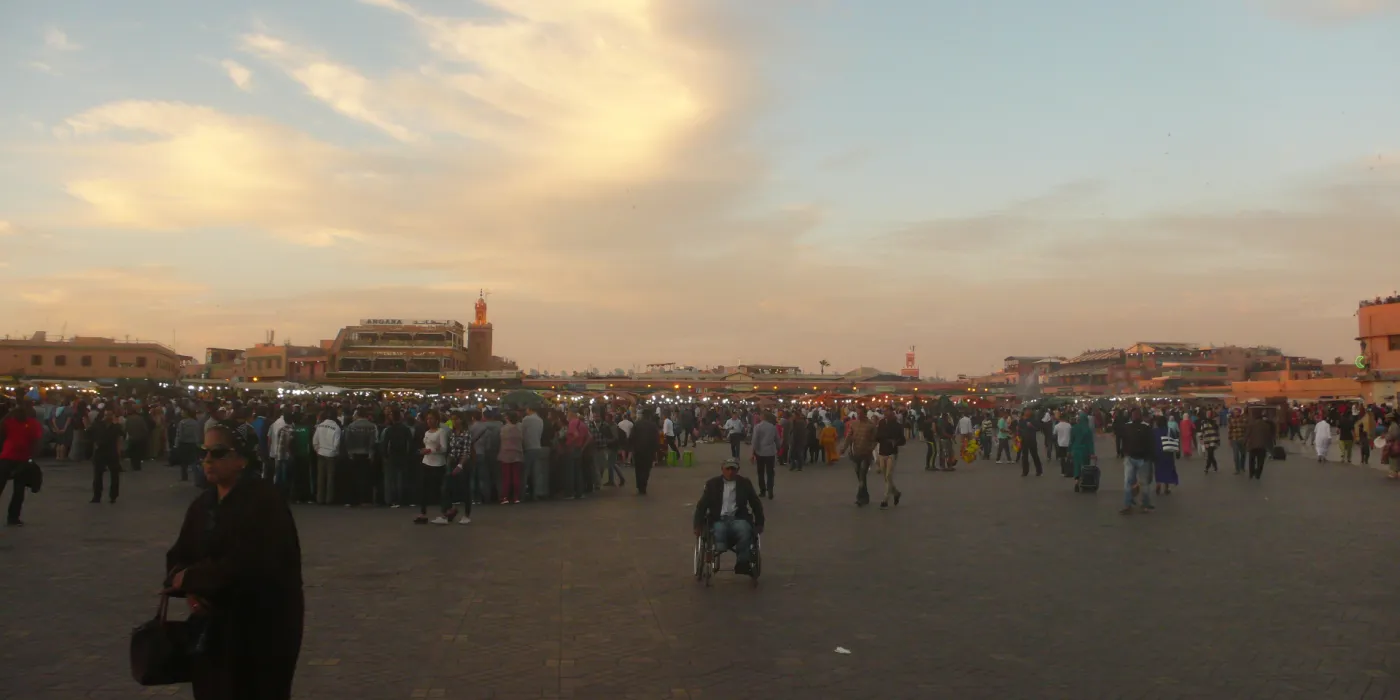
Come back to Jemaa el-Fna before dark. In daylight, find the streets you will use to leave the square and note where your group can meet if you split up. Then watch the square change as people arrive for the evening. UNESCO separately recognises the cultural traditions associated with this space as intangible heritage. A rooftop terrace can give you a wider view of the activity. Ask about seating or ordering arrangements before going upstairs. If someone in your party prefers quieter places, stay at the edge of the square and pick a restaurant a few streets away.
Day two. Jardin Majorelle and a flexible afternoon
Book your preferred slot for Jardin Majorelle through the garden's official online ticketing service. Read what your ticket covers, as the garden and museums offer different visit combinations. Published hours differ across pages on the official website, so use the ticket calendar and confirmation for your chosen date. Save the booking code somewhere you can reach offline and give yourself time to find the entrance. If you are staying in the medina, ask your host where to meet a car and where the driver should drop you off for the garden.
Take the paths at a leisurely pace. The intense blue of the villa looks different from each angle, especially through green leaves or across a pool. Make time for the plants and smaller details around the paths. If you are especially interested in textiles, jewellery and the cultural traditions of Morocco, consider the Pierre Bergé Museum of Berber Arts. Check that the museum is included in the ticket you select. Families can pick one extra stop and leave time for a break before deciding whether to fit anything else into the afternoon.

For the rest of the day, have coffee in Guéliz or return to the medina for a visit you missed. The Ben Youssef Madrasa is one option for travellers who want another look at historic architecture. A more relaxed choice is to revisit a market lane, have a long lunch or photograph a place you saw only in passing. If you are catching a train or flight later, this free part of the itinerary gives you time to collect your luggage and leave without cutting a reserved visit short. Check the relevant departure information directly with your operator.
Where to stay and how to handle arrival
A riad in the medina makes it easy to stop at your room between visits. Ask the host where a taxi or transfer can reach and how far you will have to walk from that point with bags. Save the name and address in your phone, alongside a map pin and the host's contact details. If you arrive after dark, confirm the check-in arrangements in advance and ask for a landmark near the meeting point. A hotel in Guéliz can make more sense if you prefer a car to stop at the door or are continuing by train. Verify your connection before you choose a hotel based on the station.
When comparing flights, look at when you can actually reach your accommodation and whether your return leaves a useful morning. If you are travelling from Poland, consult the Polish foreign ministry's Morocco travel information and your airline's requirements before departure. Travellers starting elsewhere should consult the authority for their own passport. An early arrival makes it easier to add the first walk, while a late arrival is often better used to settle in. For rail travel, confirm your dates and timings with ONCF. Set aside time for the journey from your hotel to the station.
What to bring and how to slow down
Wear shoes that are comfortable on uneven paving. Bring water, a layer for a cool evening and a closeable bag you can keep near you in crowds. Download the addresses of your first stop and your accommodation before you head out. In the medina, watch for bicycles and scooters, especially when stepping unexpectedly out of a doorway. For a visit with a pushchair or someone with limited mobility, ask the accommodation and specific venues about step-free entrances, surfaces and resting points. The most comfortable route may be on a wider street even when a map suggests a shorter alternative.
If you have one full day, make the medina and Bahia Palace your main stops and end at Jemaa el-Fna, or book Majorelle and take a shorter medina walk later. With two days, keep one fixed visit for each morning and allow a little flexibility around meals and evening plans. The best parts of a short Marrakech trip can be the minutes you leave unplanned, when you can sit down for tea, look again at a tiled doorway or return to the square to see how it changes.
Official planning resources
UNESCO – Medina · UNESCO – Jemaa el-Fna · Palais Bahia · Jardin Majorelle · ONCF
Photography and licences
Jemaa el-Fna square in Marrakech at sunset — Alraiti / CC BY-SA 4.0

Decorated courtyard of Bahia Palace in Marrakech — Clément Bardot / CC BY-SA 4.0

Greenery and the blue villa in Jardin Majorelle — Herbert wie / CC BY-SA 4.0
